
Planning real-life tasks
Key considerations when planning real-life tasks
Considerations for planning real-life tasks
In line with the
Action-oriented
This approach views learners as social agents and active participants in their own learning. It implies the use of the target language by learners while engaging in purposeful, collaborative tasks.
approach outlined in the
CEFR
The Common European Framework of Reference for Languages: Learning, Teaching, Assessment was published by the Council of Europe in 2001. This framework of reference provides tools, guidelines, and resources to support the teaching, learning and assessment of languages.
CV, the use of real-life tasks is central to the development of communicative competence. A
Task
a purposeful action that requires the use of language and broader competences to achieve a clear goal or outcome. Tasks can cover a wide range of actions such as making plans, playing a game, ordering a meal, or preparing a class newspaper through group work.
is a purposeful action that requires the use of language
Competences
The sum of knowledge, skills, characteristics, personality traits and attitudes which are called upon to perform actions of all kinds, including language activities. (CoE, CEFR. 2001, p.9)
along with broader
Competences
The sum of knowledge, skills, characteristics, personality traits and attitudes which are called upon to perform actions of all kinds, including language activities. (CoE, CEFR. 2001, p.9)
to achieve a clear goal or outcome. Tasks can cover a wide range of actions such as making plans, playing a game, ordering a meal, or preparing a class newspaper through group work. Tasks offer students an opportunity to use language for a real purpose. The use of tasks further supports an integrated approach to planning with learning outcomes across the three strands of Communicative competence, Language awareness and Socio-cultural knowledge and
Intercultural awareness
An awareness of the student’s own and other cultures, values and beliefs. It builds understanding, empathy, respect, and acceptance of other people and cultures by focusing on the development of specific knowledge, attitudes and skills.
.
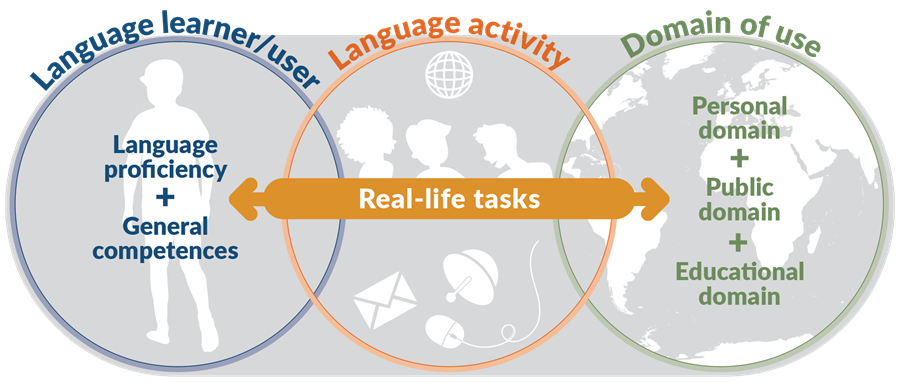
Figure 7: Model of language use within the
Action-oriented
This approach views learners as social agents and active participants in their own learning. It implies the use of the target language by learners while engaging in purposeful, collaborative tasks.
approach
The key considerations below can support teachers in planning real-life tasks individually and/or collaboratively in line with the
Action-oriented
This approach views learners as social agents and active participants in their own learning. It implies the use of the target language by learners while engaging in purposeful, collaborative tasks.
approach. They have been adapted from the
Action-oriented
This approach views learners as social agents and active participants in their own learning. It implies the use of the target language by learners while engaging in purposeful, collaborative tasks.
Handbook, Canadian Association of Second Language Teachers (CASLT), 2019:
- Does the action have a real purpose that can be applied in the real world?
- Does it take place in an authentic social context?
- Is there a clear goal that results in a product or outcome?
- Is learning supported by authentic real-life texts and experiences?
- Do conditions promote creative and critical thinking?
- Do learners draw upon their existing and newly developed
Competences
The sum of knowledge, skills, characteristics, personality traits and attitudes which are called upon to perform actions of all kinds, including language activities. (CoE, CEFR. 2001, p.9) ? - Do learners make choices?
- Is
Task
a purposeful action that requires the use of language and broader competences to achieve a clear goal or outcome. Tasks can cover a wide range of actions such as making plans, playing a game, ordering a meal, or preparing a class newspaper through group work. completion attainable for all learners?
These resources include illustrative examples of real-life tasks within the A1-A2 band of the
CEFR
The Common European Framework of Reference for Languages: Learning, Teaching, Assessment was published by the Council of Europe in 2001. This framework of reference provides tools, guidelines, and resources to support the teaching, learning and assessment of languages.
and key considerations for planning real-life tasks. These resources are purely illustrative in nature and may support teachers in planning real-life tasks for the purpose of teaching, learning and assessment, both individually, and collaboratively with their colleagues.
These key considerations above have been used in annotating the Illustrative examples of
Task
a purposeful action that requires the use of language and broader competences to achieve a clear goal or outcome. Tasks can cover a wide range of actions such as making plans, playing a game, ordering a meal, or preparing a class newspaper through group work.
scenarios.
Further planning supports
Further support materials have been developed with practising
MFL
Modern Foreign Languages
teachers to support teachers in planning real-life
Task
a purposeful action that requires the use of language and broader competences to achieve a clear goal or outcome. Tasks can cover a wide range of actions such as making plans, playing a game, ordering a meal, or preparing a class newspaper through group work.
scenarios in line with the
Action-oriented
This approach views learners as social agents and active participants in their own learning. It implies the use of the target language by learners while engaging in purposeful, collaborative tasks.
approach. Click the link to access the document.
Illustrative Planning Supports for Real-life Task Scenarios